Updated: March 30, 2026
Why Solar Trends Matter
Ohio policymakers are shaping our clean energy future right now. Our utility-scale solar trend report keeps you updated on what projects are moving forward, what’s stalled, and how state and local decisions affect communities, jobs, and our grid. Ohio families face rising bill costs and reliability challenges to our grid. Utility-scale solar projects bring new energy, new jobs, and new revenue for schools and services, but only if projects move forward equitably. Here at the Ohio Environmental Council, we’re tracking approvals, proposals, denials, and bans under Ohio’s restrictive siting rules.
Ohio Utility-Scale Solar Trends: Q1 2026
This quarter marks a turning point for solar development in Ohio. A major project denial, a high-stakes Supreme Court case, and a growing local referendum movement are all shaping how, and whether, new energy projects move forward. These developments are unfolding against a backdrop of two competing forces: rapidly growing electricity demand and an increasingly fragmented local siting environment. Together, they highlight how the future of clean energy deployment, local economies, and property rights in Ohio will be determined in the months ahead.

What is utility-scale solar?
Utility-scale solar projects generate enough power for tens of thousands of homes.
Why it matters:
- Grid reliability: Utility-scale solar adds large amounts of new generation capacity to a grid facing rising demand from data centers, electric vehicles, and manufacturing growth.
- Affordability: Once built, solar projects produce energy at predictable, low cost, helping stabilize long-term electricity prices.
- Local benefits: These projects bring millions in tax revenue to support schools, emergency services, and infrastructure in rural communities.
- Climate and air quality: Unlike fossil-fuel generation, these projects create clean, zero-emission power, improving public health and cutting pollution.
In short: utility scale solar keeps the lights on, lower costs, and powers economic opportunity, if projects are allowed to move forward responsibly.
Clean Energy Bans:
Changes to Ohio law a few years ago through a bill known as “SB 52” now allow county commissioners to ban clean energy outright without any consideration to individual projects.
How it’s being used:
- Preemptive countywide bans. Several counties have passed blanket restrictions rather than evaluating projects on the record. (e.g. Clark County vote in Sept 2025)
- Referendum dynamics. Bans on restricted areas can go to voters, creating long periods of uncertainty that stall projects (e.g. Richland County heading to the May 2026 ballot.)
- Statewide pattern. Since SB 52 took effect, counties have increasingly moved from evaluating projects on their merits to imposing broad exclusions. As of September 2025, 37 counties have passed resolutions creating solar exclusion zones in at least one township, according to Ohio Citizen Action’s county tracker.
- Critics’ concern. Legal and policy analyses warn how certain components of SB 52 can function as a de facto local veto, sidelining OPSB’s evidentiary review in favor of upfront political decisions.
Why it matters: As Ohio’s demand for energy increases, local bans and complicated approval processes make it harder to build new clean energy projects. These delays can create a reliability problem and drive-up costs for anyone who pays an electric bill.
What Do These Bans Mean for Ohio?
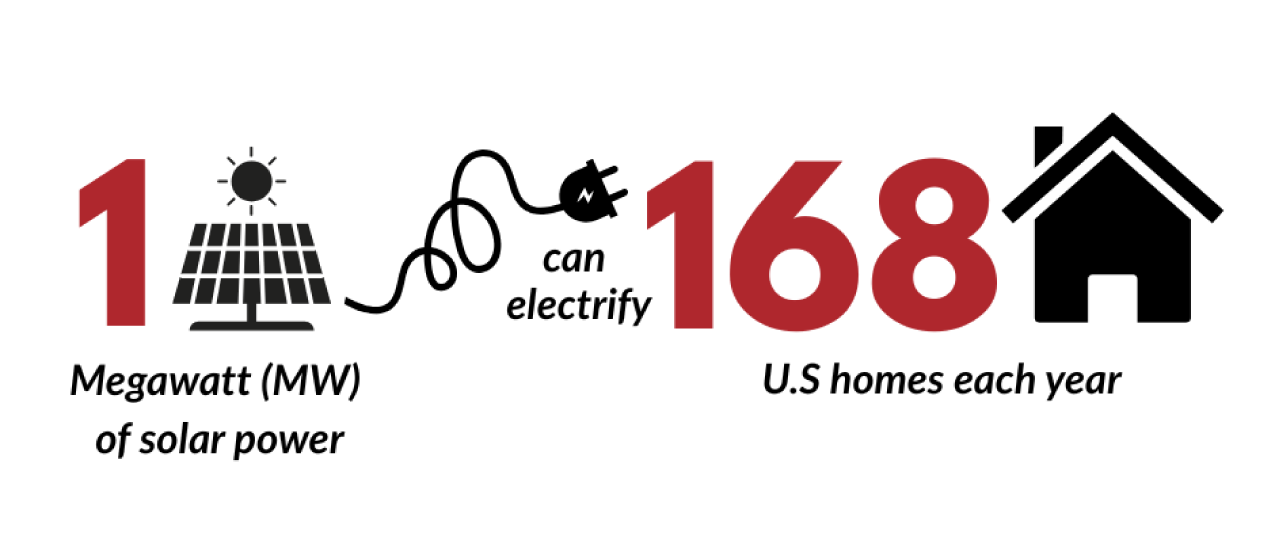
Every 1 megawatt (MW) of solar power can supply electricity for about 168 average U.S. homes each year. Based on that estimate:
- Ohio currently has 3,964.6 MW of utility-scale solar online, thus powering roughly 667,000 homes (source: Ohio Power Siting Board)
- Ohio ranks 11th nationally in total installed solar capacity, according to the Solar Energy Industries Association (SEIA). (This ranking includes all solar sources: utility-scale, commercial, and residential)
- In 2025, so far, another 440 MW has been approved, thus powering roughly 74,000 homes
- About 1,200 MW of projects have been withdrawn or cancelled in 2025, which would have powered roughly 200,000 homes
Additional Sources: What’s in a Megawatt – SEIA, Frequently Asked Questions (FAQs) – U.S. Energy Information Administration (EIA)
Key developments this quarter included the following:
Crossroads Solar DENIED: loud voices override objective analysis.
The Ohio Power Siting Board denied the Crossroads Solar project in Morrow County, marking a significant and concerning development for utility-scale solar in Ohio. The decision follows an unusual procedural path that has raised broader questions about the consistency and integrity of the state’s siting process.
A key turning point in the case came when OPSB Staff reversed recommendation for approval and instead advised denial of the project. Staff recommendations typically carry significant weight in Board decisions, and reversals of this kind are highly unusual, particularly in solar cases. This type of late-stage shift introduces new uncertainty into a process that is generally expected to follow a consistent, evidence-based trajectory, raising broader concerns about predictability for both developers and communities engaged in Ohio’s siting process.
The case also drew significant attention due to concerns about the role of public comments in the decision-making process. Reporting from The Ohio Newsroom highlighted evidence that some public comments opposing the project may have been fake or not tied to real individuals, raising serious concerns about whether portions of the public record used in the Board’s decision-making were unreliable.
In response, the Ohio Environmental Council submitted filings and issued a public statement emphasizing that project decisions should be grounded in substantiated evidence and the statutory public interest standard, not solely the volume of opposition. (Read OEC statement)
Taken together, these developments signal a potentially shifting, and less predictable, landscape for solar siting in Ohio. The Crossroads decision raises important questions about how public input is evaluated, how much weight is given to procedural dynamics versus substantive evidence, and whether project outcomes may become less predictable for communities, developers, and stakeholders alike. The decision also emphasizes the importance of all Ohioans voicing in public comments and public hearings on these cases to support clean, affordable, renewable energy.
Richland County update: grassroots coalition builds momentum to reject solar ban.
Richland County residents will vote on May 5, 2026 on whether to uphold or reject a county-level ban on solar and wind development enacted under SB 52. This referendum represents one of the first major opportunities for voters in Ohio to directly weigh in on the use of SB 52 authority to impose blanket restrictions on renewable energy development.
A local coalition, No Ban on Property Rights, has formed to oppose the restriction and advocate for a more balanced, case-by-case approach to development. As the coalition describes its mission, the effort is rooted in the belief that residents deserve a meaningful voice in shaping the county’s future, and that landowners should retain the ability to make decisions about how their property is used.
Support for rejecting the ban has continued to grow, including from local leaders and advocates who argue the restriction limits economic opportunity, reduces potential tax revenue, and undermines property rights. (Insert link to op-ed from former Richland County Commissioner)
The Ohio Environmental Council Action Fund has officially endorsed support for the referendum, aligning with local residents working to restore a fair, transparent process for evaluating solar projects on their individual merits.
The outcome of this vote will be closely watched across Ohio, as it may signal whether communities favor broad prohibitions on clean energy development or a more pragmatic approach that balances agricultural preservation, community input, property rights, and economic growth.
Supreme Court update on Kingwood Solar: waiting for clarity on Ohio’s “public interest” standard.
The Kingwood Solar case remains one of the most consequential utility-scale solar proceedings in Ohio and is poised to shape how projects are evaluated under the state’s “public interest” standard. At the center of the case is a fundamental question: how should statewide benefits, such as grid reliability, energy affordability, and economic development be weighed against local opposition in siting decisions?
The Ohio Power Siting Board approved the Kingwood Solar project, finding that it met Ohio’s legal requirements. That decision was challenged and is now under review by the Ohio Supreme Court. The case is expected to be a defining test of how the Court interprets the “public interest” standard, particularly the role of local opposition in statewide siting decisions.
In a related decision, South Branch Solar v. Ohio Power Siting Board, the Ohio Supreme Court provided important clarification on how the “public interest” standard should be applied. The Court made clear that while local government resolutions and public opposition are important considerations, they are not determinative of whether a project serves the public interest.
For a deeper dive into how Ohio’s “public interest” standard has evolved under SB 52 and related cases, the OEC Law Center recently hosted a webinar exploring key legal trends and implications for future energy development. (Watch the webinar)
The implications of this legal framework are significant. Together, these developments help define the boundaries of local control under SB 52 and provide stronger grounding for future solar projects facing organized local opposition. They signal that Ohio’s siting process must consider the full range of public benefits, not solely the volume of local resistance.
At the same time, the economic stakes remain substantial at the local level. Labor organizations, including IBEW Local 82, have highlighted that the Kingwood Solar project could support up to 150 construction jobs and generate millions of dollars in local tax revenue over its lifetime. Ohio is also facing soaring energy costs and needs more energy added to the grid to relieve these pricing pressures. These factors underscore the real-world impacts these decisions have on Ohio communities.
Project status updates:
Projects in active review include the following:
Sloopy Solar (Clark County):
The Sloopy Solar project continues to face significant local opposition, with Clark County commissioners formally passing a resolution opposing the project. In a notable development, Ohio Power Siting Board Staff has issued a report recommending denial of the project, despite indications that it meets Ohio’s technical siting requirements, highlighting growing tension around how the “public interest” standard is being applied. A local public hearing took place on March 26 as part of the final stages of the OPSB review process, providing another key opportunity for community input.
Highlights of this application:
The project will add 180 MWs of solar to the grid. The developer signed an agreement with local labor unions to hire local labor and pay prevailing wage. The developer incorporated community feedback by increasing setbacks by an additional 100 feet and canceled planned development on parcels adjacent to a cemetery. Clark County has multiple census tracts which are experiencing elevated levels of energy burden and health issues like asthma which would benefit from adding clean energy to Ohio’s grid.
Carnation Solar (Fairfield County):
The Ohio Power Siting Board held an evidentiary hearing for Carnation Solar in February 2026, marking one of the final stages of the application process before written arguments and a Board decision. The Ohio Power Siting Board Staff also recommended denial in this case. The project remains a key example of how utility-scale solar proposals are moving through Ohio’s increasingly contested siting process.
Highlights of this application:
The project will add 142 MWs of solar energy to the grid. The developer is planning to add sheep grazing and bee apiaries to the project site as additional productive uses of the land. The developer agreed to first of its kind soil testing and monitoring by the Fairfield County Soil and Water Conservation District throughout project construction and operation.
Approved or advancing projects:
Ritter Station Solar (Fulton County):
The Ohio Power Siting Board approved the Ritter Station Solar project in late 2025, demonstrating that projects can still move forward under Ohio’s current siting framework when conditions and mitigation requirements are met. The approval highlights that, even amid growing opposition and policy uncertainty, pathways for responsible solar development remain viable.
Frasier Solar (Knox County):
The Ohio Power Siting Board approved the Frasier Solar project in 2025. The project is currently under appeal before the Ohio Supreme Court. The Ohio Environmental Council filed an amicus brief in support of the Board’s approval, emphasizing the project’s compliance with Ohio’s siting standards and its broader public benefits. (Read OEC amicus brief)
Eastern Cottontail Solar (Madison County):
Eastern Cottontail Solar was also approved by the Ohio Power Siting Board and remains under appeal at the Ohio Supreme Court. The case is part of a broader set of legal challenges that will help define how Ohio courts interpret the “public interest” standard in solar siting decisions.
What is the OPSB Approval Process?
Before any large solar project (greater than or equal to 50 MW) can be built in Ohio, it must be certified by the Ohio Power Siting Board (OPSB).
The process includes:
1. Application: Developer files a detailed proposal covering siting, environmental, and community impacts.
2. Staff Review: OPSB staff reviews the project and issues a staff report with recommended conditions.
3. Public Hearing: Residents share support or concerns on the record.
4. Evidentiary Hearing: A formal, courtroom-style proceeding where the developer, OPSB staff, and intervenors present expert testimony and evidence.
5. Board Decision: The OPSB votes to approve, deny, or modify the project, often with conditions designed to protect farmland, wildlife, and communities.
Denied or Withdrawn
- Richwood Solar (250 MW, Union Col) – Denied
- Stark Solar (150 MW, Stark Co.) – Denied
- Grange Solar (500 MW, Logan Co.) – Withdrawn
- Birch Solar (300 MW, Allen/Auglaize Cos.) – Suspended
These losses represent more than a thousand megawatts stalled or removed from Ohio’s energy grid pipeline, at a time when demand for energy is surging, and grid reliability and affordability are under growing pressure.
Recent Clean Energy Bans
- Clark County: Ban on all large-scale solar/wind (September 5)
- Crawford County: County-wide restrictions passed on July 6.
- Morrow County: Ban in five townships (Aug. 25)
- Richland County: Solar and Wind Ban Heads to the Ballot
Community energy and the broader policy landscape.
House Bill 303 (Community Energy) is a bipartisan proposal to create a pilot program that allows Ohioans to subscribe to locally generated energy projects and receive credits on their utility bills. The policy is designed to expand access to clean energy, particularly for renters and residents without suitable rooftops, while helping lower energy costs and increase local energy resilience. The bill passed the Ohio House and is now under consideration in the Senate.
Momentum for HB 303 continues to build at both the state and local levels. Several communities, including Lakewood, Cleveland Heights, Wyoming, and Columbus have passed resolutions in support of community energy legislation, with additional municipalities actively considering similar measures. These resolutions signal growing demand from local governments for policies that expand energy choice and affordability.
The Ohio Environmental Council Action Fund submitted proponent testimony in the Ohio House in support of HB 303 ahead of its passage and will continue to engage as the bill advances in the Senate. (Read OEC Action Fund testimony)
The bill is expected to receive sponsor testimony in the Senate Energy Committee on April 14, marking an important next step in advancing community energy policy in Ohio.
Read Op-Ed from the bill’s sponsor: Want lower energy bills? House Bill 303 will get Ohio there | Opinion
In addition, new legislation has been introduced to expand access to “balcony solar,” which would allow residents, particularly those living in apartments or multifamily housing, to install small-scale solar systems and reduce their energy costs. This emerging policy concept reflects a broader shift toward expanding distributed energy options and increasing access to clean energy for more Ohioans.
What’s Next
- More bans on the horizon: Ongoing hearings in several counties
- Construction mobilization: Recently approved projects move forward with construction and connecting to the grid
What this means for Ohio:
Ohio is at a pivotal moment for its energy future. Rapidly increasing electricity demand, including from data centers, is intensifying the need for new generation resources. At the same time, recent developments, from local ballot initiatives and court cases to evolving siting decisions, are introducing new complexity and uncertainty into how and where energy projects can move forward.
Utility-scale solar remains one of the fastest and most cost-effective resources available to meet this demand. At the same time, policies like community energy and emerging distributed solutions such as balcony solar are expanding opportunities for Ohioans to directly participate in and benefit from the state’s energy transition.
Whether Ohio captures the economic, reliability, and affordability benefits of solar will depend on how these legal, local, and legislative dynamics unfold in the coming months.
How You Can Help
Your voice matters in public hearings and local decisions.
