September 24, 2026
Non-Native Species Management: Is there another way?
What if we could address the challenges of Non-Native Invasive Species (NNIS) in productive, beneficial ways – that feed, clothe, and heal us – as we work to re-establish ecosystems thriving with the native flora and fauna we are working to protect? Continuing to reflect upon Non-Native Invasive Species Management, we hope to uplift creative problem solving and acknowledge that helping to restore balanced ecosystems is crucial work that can be done with respect and humility, remembering that all beings have inherent value and belonging in the vast, miraculous web of life. The spread of “invasive species”, and the decline of native species are a result, after all, of human activity. The following examples suggest that it could be possible to love NNIS to death.
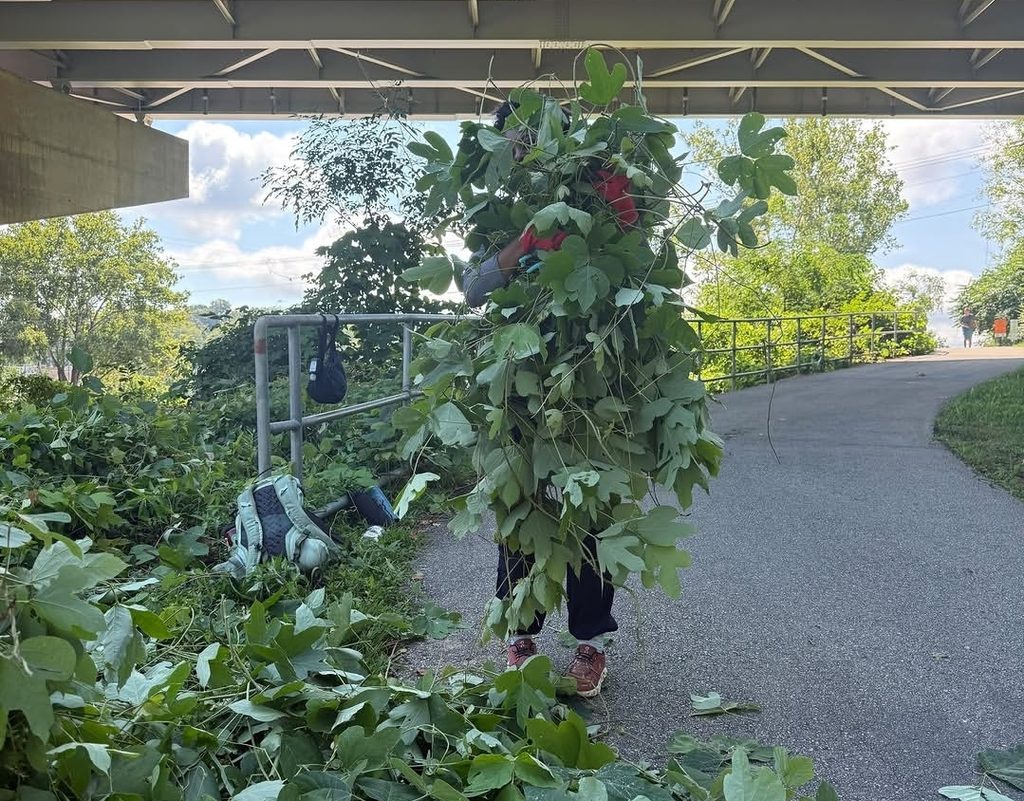
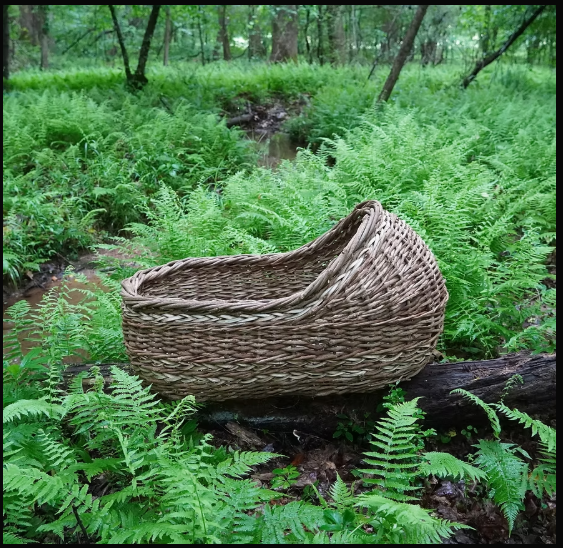
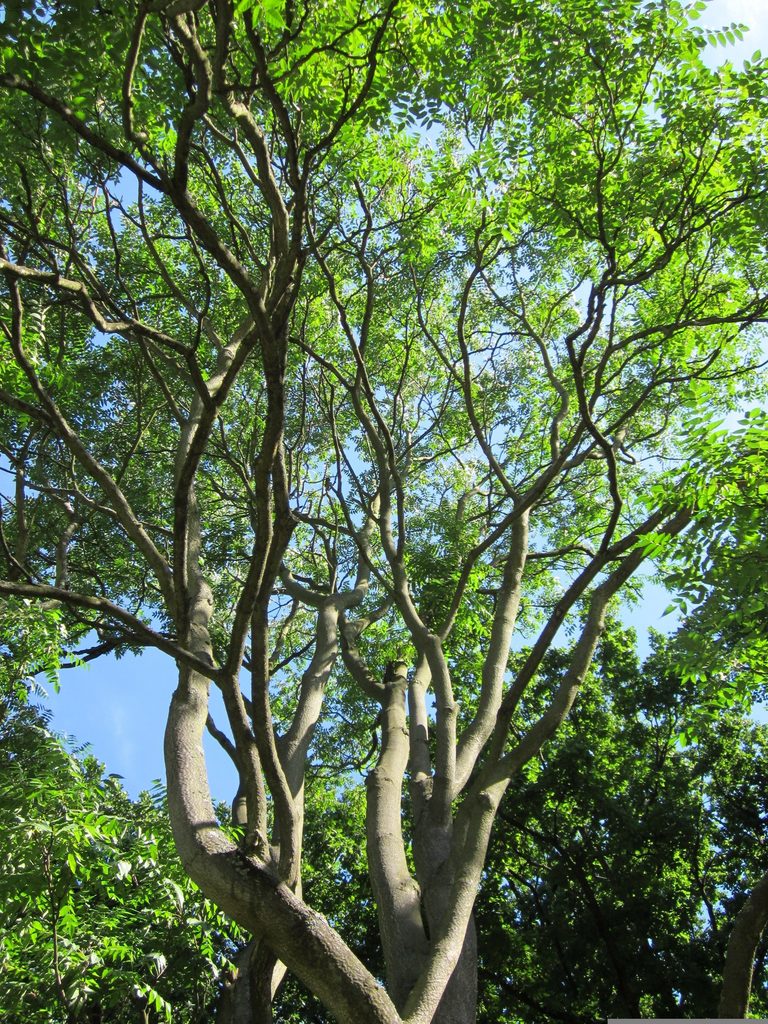
Photo Caption: Harvesting Kudzu | The Patchwork Underground, Kudzu Bassinet | Delia Fian. Ailanthus | Wikimedia
Now considered highly invasive, Japanese Honeysuckle (Lonicera japonica) was brought to the US as an ornamental plant in the early 1800s, a time when rapid deforestation and industrial extraction was sweeping across Appalachia. Japanese Honeysuckle can be found thriving in disturbed sites and edge habitats, strangling native Trees as they vine their way into the canopy. The sweet-smelling flowers, leaves, and stems are rich in phytochemicals that act as antibacterial, antiviral, anti-inflammatory, antioxidant, and more, and have been found to be effective against E. coli, salmonella, and streptococcus. Lonicera japonica could even prove to be effective in the prevention and treatment of Lyme disease and its symptoms. Cherokee artisans are among those using this tenacious plant in basket-weaving.
Another species brought to the U.S. and promoted as an “ornamental estate plant” is Japanese Knotweed (Polygonum cuspidatum). Incredibly resilient and capable of spreading through roots, growing through concrete, and inhabiting polluted ecosystems, Knotweed is well-established along roadside drainage ditches across North America and beyond. In fact, Japanese Knotweed is a remarkable bioremediator, capable of cleansing soils contaminated with copper, lead, zinc and other toxins. In addition to being a prized edible, the plant boasts an impressive phytochemical profile including high quantities of resveratrol, along with antibacterial, antiviral, antifungal, anticarcinogenic, analgesic, and hepatoprotective constituents. In fact, Japanese Knotweed is being effectively used in the treatment and prevention of Lyme disease here in Ohio and beyond.
First brought to the U.S. in 1784 as an ornamental, Tree of Heaven (Ailanthus altissima) was purposely spread across the country for being a fast-growing species resistant to air pollution with well-known medicinal and utilitarian uses. Now considered invasive in 44 states, Tree of Heaven is being studied for anticancer, antimalarial, and anti-inflammatory properties, as well as for use in papermaking and as a renewable biomass and fuelwood; Ailanthus silk is lightweight, warm, and durable; and Tree of Heaven is able to grow and reproduce in heavily polluted soils of former industrial sites, accumulating and storing toxins.
Kudzu (Pueraria montana), “the vine that ate the south”, is slowly creeping into Ohio, having been promoted for erosion control by the US government to the tune of $8/acre for farmers in the 1930s and 40s. In North Carolina, Alyssa Sacora of The Patchwork Underground is among people finding creative solutions to Kudzu’s rapid spreading, teaching folks to make paper from the abundant material; Kudzu is being researched as a source of biofuel in Tennesee; Delia Fian Turner weaves beautiful, sturdy Kudzu baskets and chairs; and research at Harvard suggests Kudzu can help treat alcohol dependency. Full of vitamins, minerals, carbohydrates, protein, fiber, and more, Kudzu has been harvested for food and medicine, in the treatment of fevers, headaches, rashes and digestive upset for thousands of years.
Becoming successful stewards of a thriving interdependent global ecosystem requires constant listening, learning, and adaptation. Better understanding could lead us to asset-based solutions that reduce costly, harmful chemical inputs and perpetual maintenance cycles, while providing economic and social benefits like education and workforce development, food and medicine, fuel, fiber, and more. In Appalachia, American Ginseng (Panax quinquefolia) is a threatened species because of habitat loss and over-harvesting. Isn’t it possible we could love other plants to death?
Citations
Cherokee, Japanese Honeysuckle basketry: https://quallaartsandcrafts.org/honeysuckle-baskets/
Fian, Delia. Foraged Basketry: Weaving with Wild and Invasive Plants. Herbert Press, 2026.
Orion, Tao. Beyond the War on Invasive Species: A Permaculture Approach to Ecosystem Restoration. Chelsea Green Publishing, 2015.
Scott, Timothy Lee. Invasive Plant Medicine: The Ecological Benefits and Healing Abilities of Invasives. Rochester, Vermont, Healing Arts Press, 2010.
